

Chowk — India's missing
hyperlocal events layer.

See Prototype

Chowk — India's missing
hyperlocal events layer.

Chowk — India's missing
hyperlocal events layer.

See Prototype

THE STORY

The organiser fears hosting an event nobody comes to. The discoverer fears showing up to something awkward. In tier-2 India, the social cost of going first is enormous, and no existing product has ever designed around it

Overall the focus was that "The product language must never say 'find friends' or 'meet strangers.' It must always say 'things happening near you.' Activity-first. Connection is what happens after."

MARKET CONTEXT

Why Tier 2 India? Why now?

682%

growth in tier-2 live events 2022–2024

51cr+

Indians in tier-2 cities with growing disposable income

0

purpose-built discovery platforms below tier-1

3 fields

to publish on Chowk vs 12+ on every competitor

Discover Flow

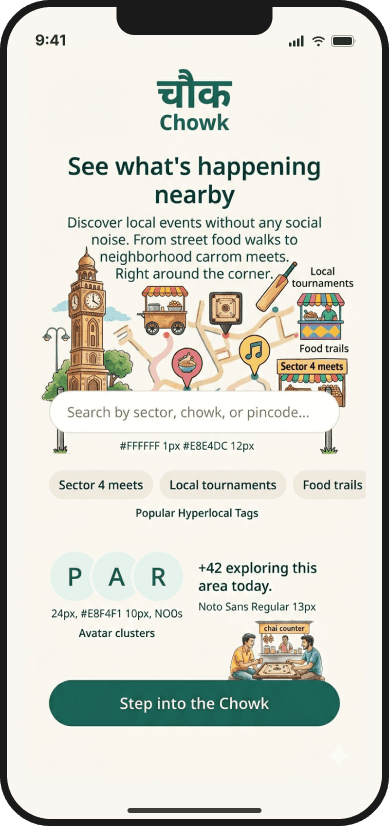
A user finds an event, reads about it, RSVPs, shares it, finds it in My Events.

Organiser Flow

Another user wants to host a event so enters information in three fields, then goes through optional details, previews event → go live with it

Five competitors. Every single one got it wrong.

I mapped BookMyShow, District, Eventbrite, Meetup, and Bumble BFF. The findings were stark:

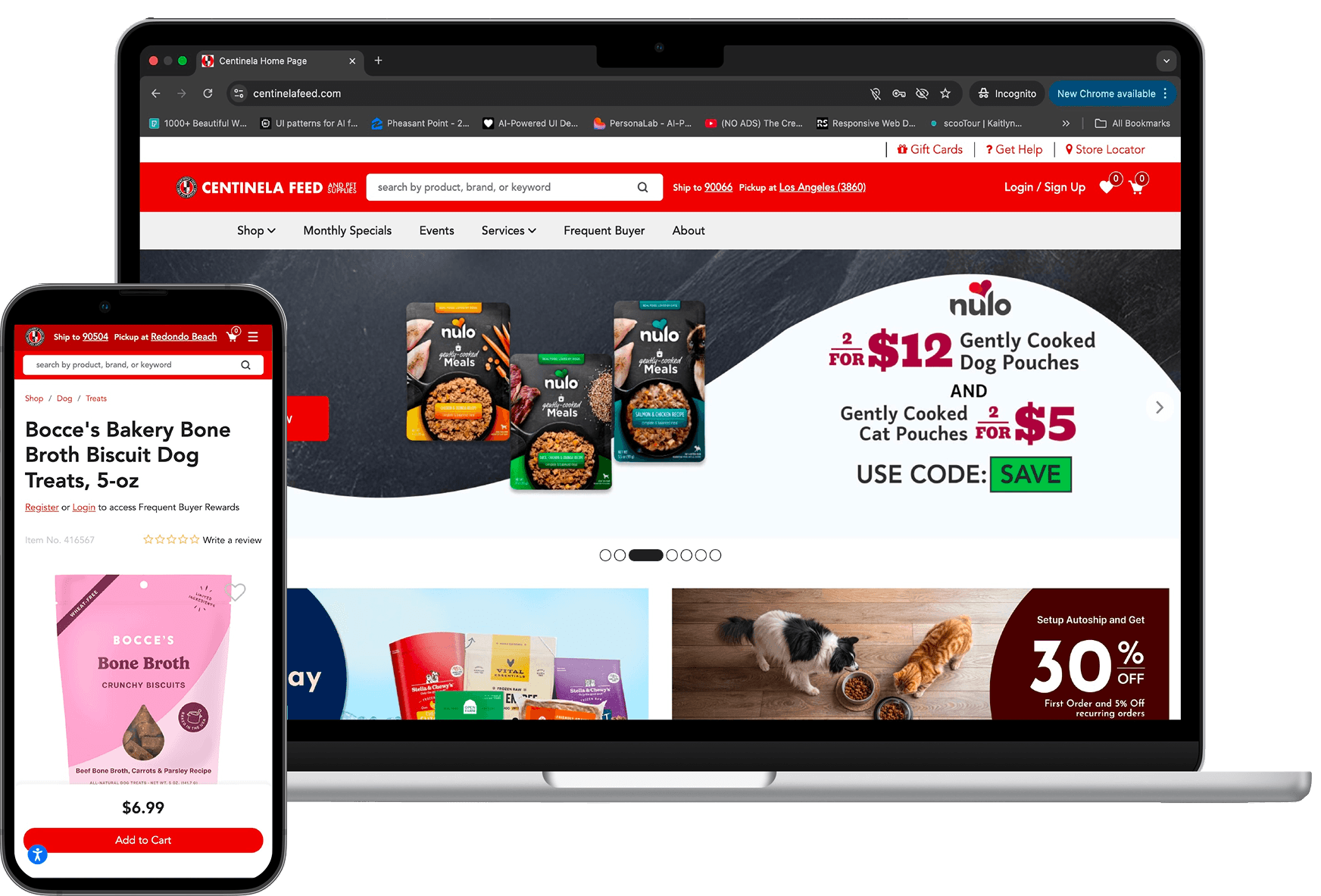
Every platform uses red or orange as its primary accent which seemed like a crowded visual signal in a market that screams for differentiation. Every platform was built for metro India and adapted downward.


Every platform optimized for the demand side (better discovery) while completely ignoring the supply side of who actually creates the events.


Chowk is designed upward. The constraints of tier-2: no professional photographers, no hero images, WhatsApp as primary social infrastructure, the social cost of empty rooms, aren't problems to work around. They're the product's DNA
Product Moat

01

Zero-friction supply

3 fields to create an event. No group setup, no professional account. The entire market ignored supply side, Chowk owns it.

02

Tier-2 native

No hero photos, avatar clusters, WhatsApp-native share, off-white surface. Not adapted downward, designed upward.

03

Activity-first language

"What's happening this week." No one admits loneliness. The cultural insight every Western-template competitor missed.

The Partnership Model

Creative Director & PM

Pinkle

Vision, concept, and product direction

Guided every design decision

Defined IA, flows, and user goals

Reviewed and approved all outputs

Pushed to GitHub, shipped the product

Structured Figma file organization

Design Partner & Engineer

Claude

Design system scaffolding & tokens

Component architecture and code

Claude Code: full app implementation

Figma structure and layer organization

GitHub-ready code, clean commits

Structured Figma file organization

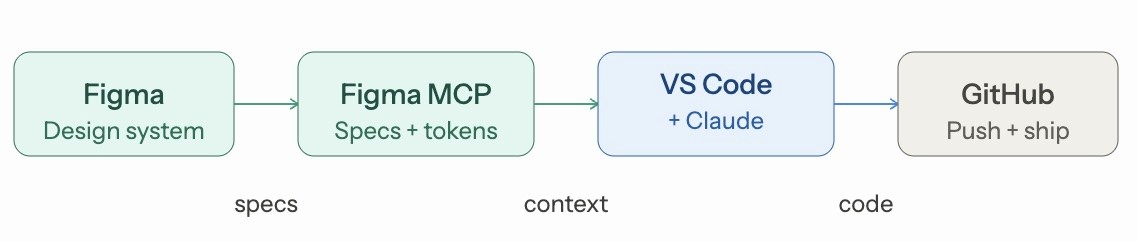
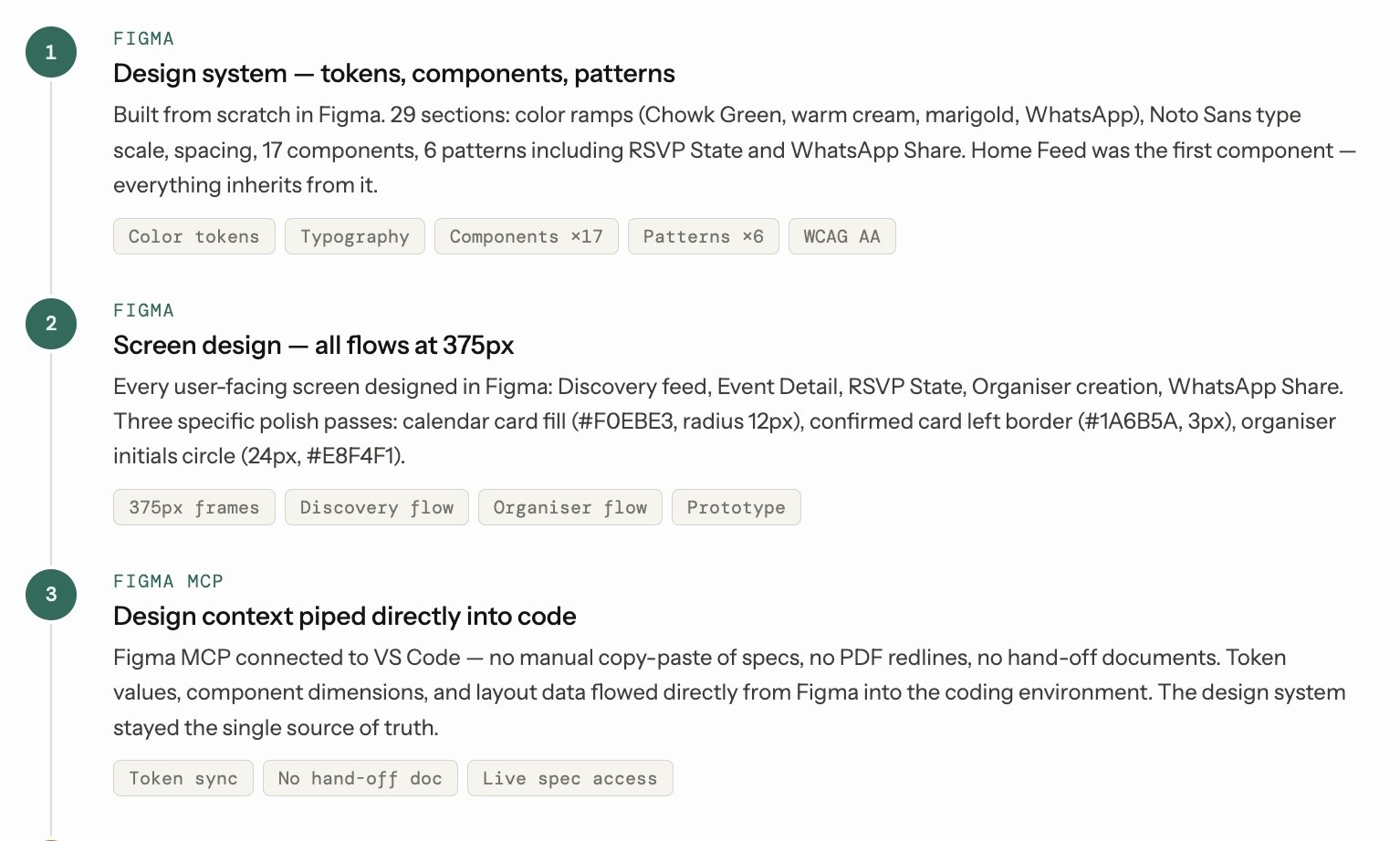
How I Built It?

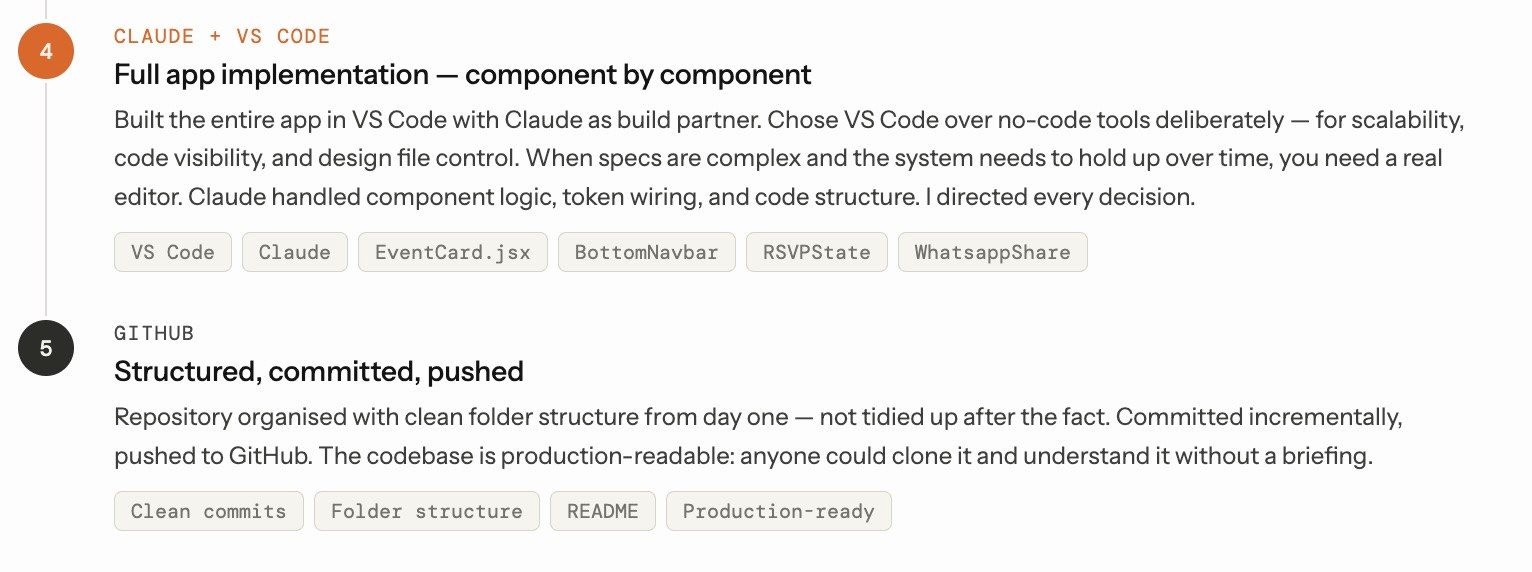
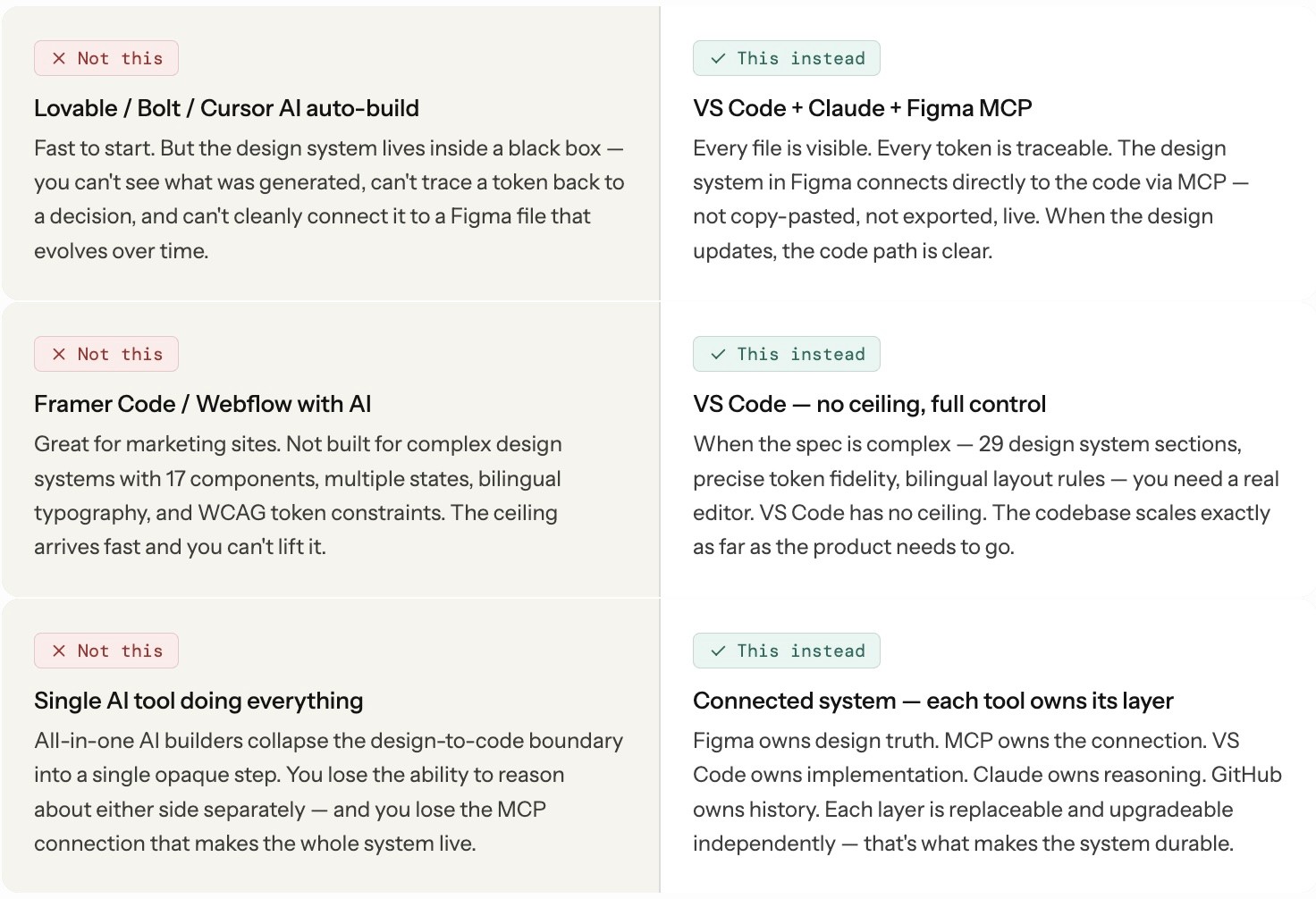
Not a hand-off process. Not design → developer → deploy. Figma, Claude, VS Code, and GitHub running as a single integrated system — with me directing every decision.

Why this tech spec?

Design System Challenges- What I learnt the Hard Way

1

Variable naming in Figma matters more than you think

When you import an .html file into Figma, the design system variables get messy, especially naming. Clean your variable names before importing. This is the step most people skip and regret.

2

Figma only copies accurately, budget time to clean

What transfers is accurate but not clean. Expect to spend real time cleaning the prototype and the design system after any import. It's not a bug, it's the workflow, plan for it.

3

Learn the deployment vocabulary before touching Claude Code

Before deploying with Claude Code, learn what Node.js, npm, and localhost actually mean. The commands make no sense without the mental model. Terminology first, then tools.
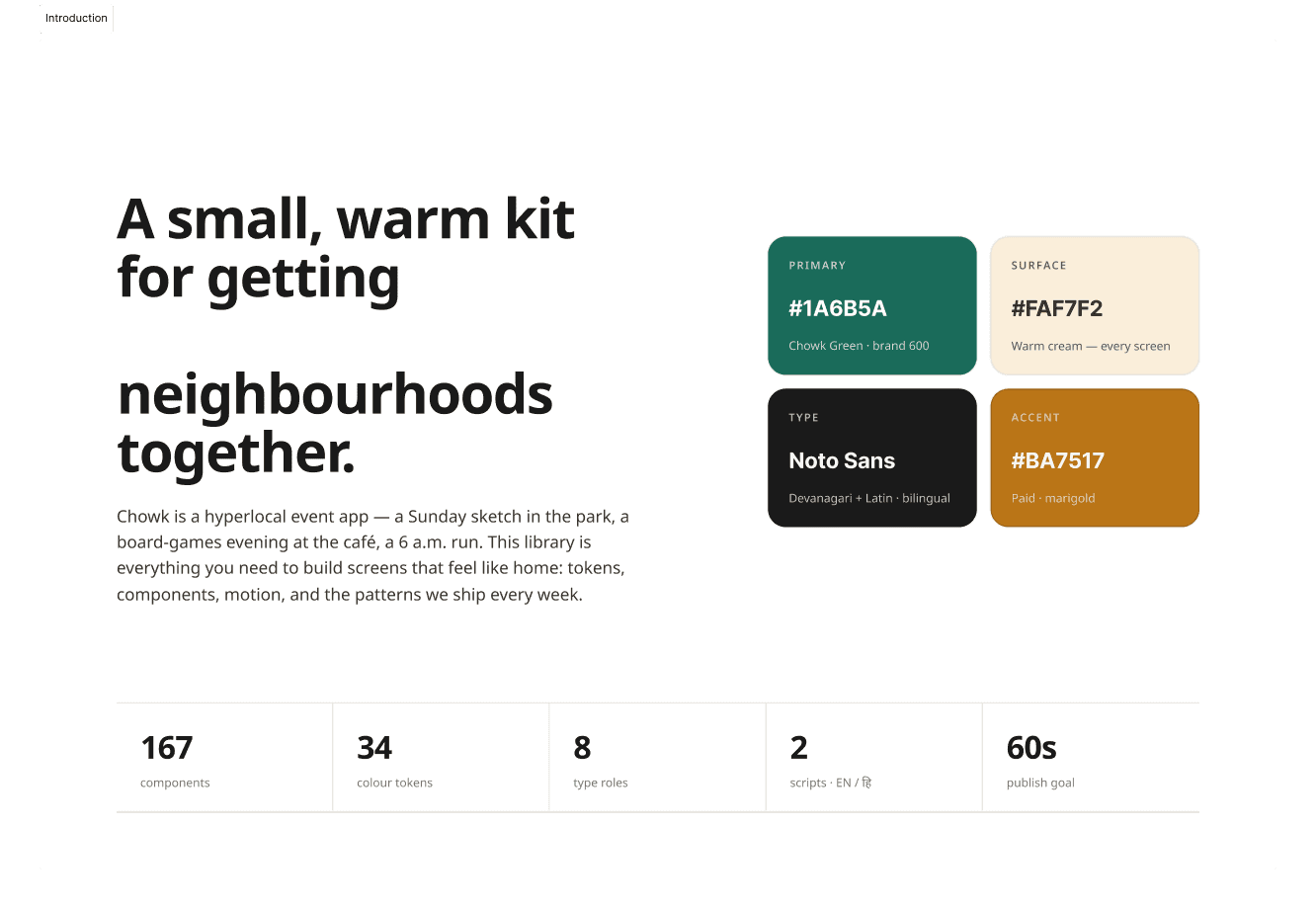
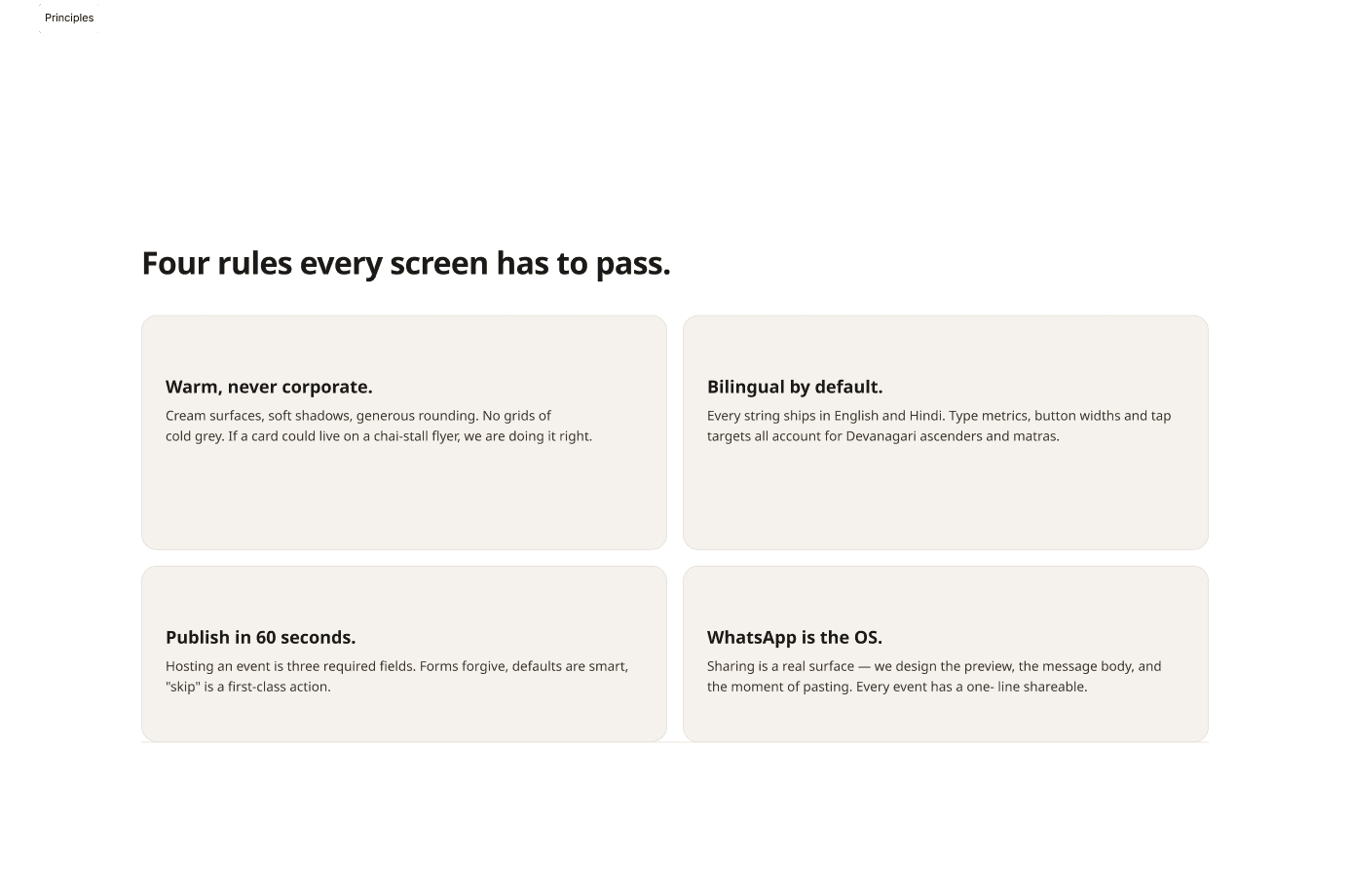
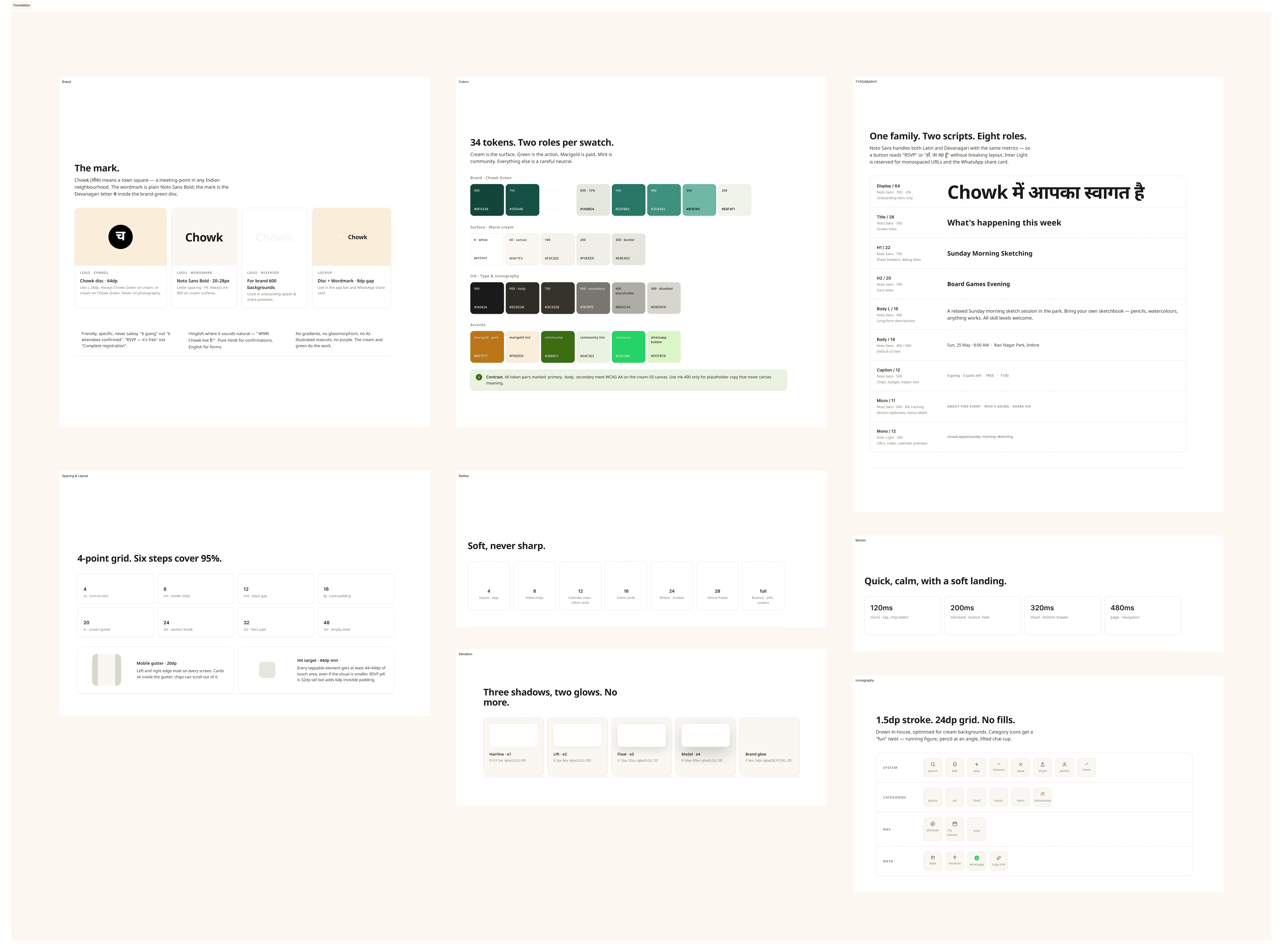
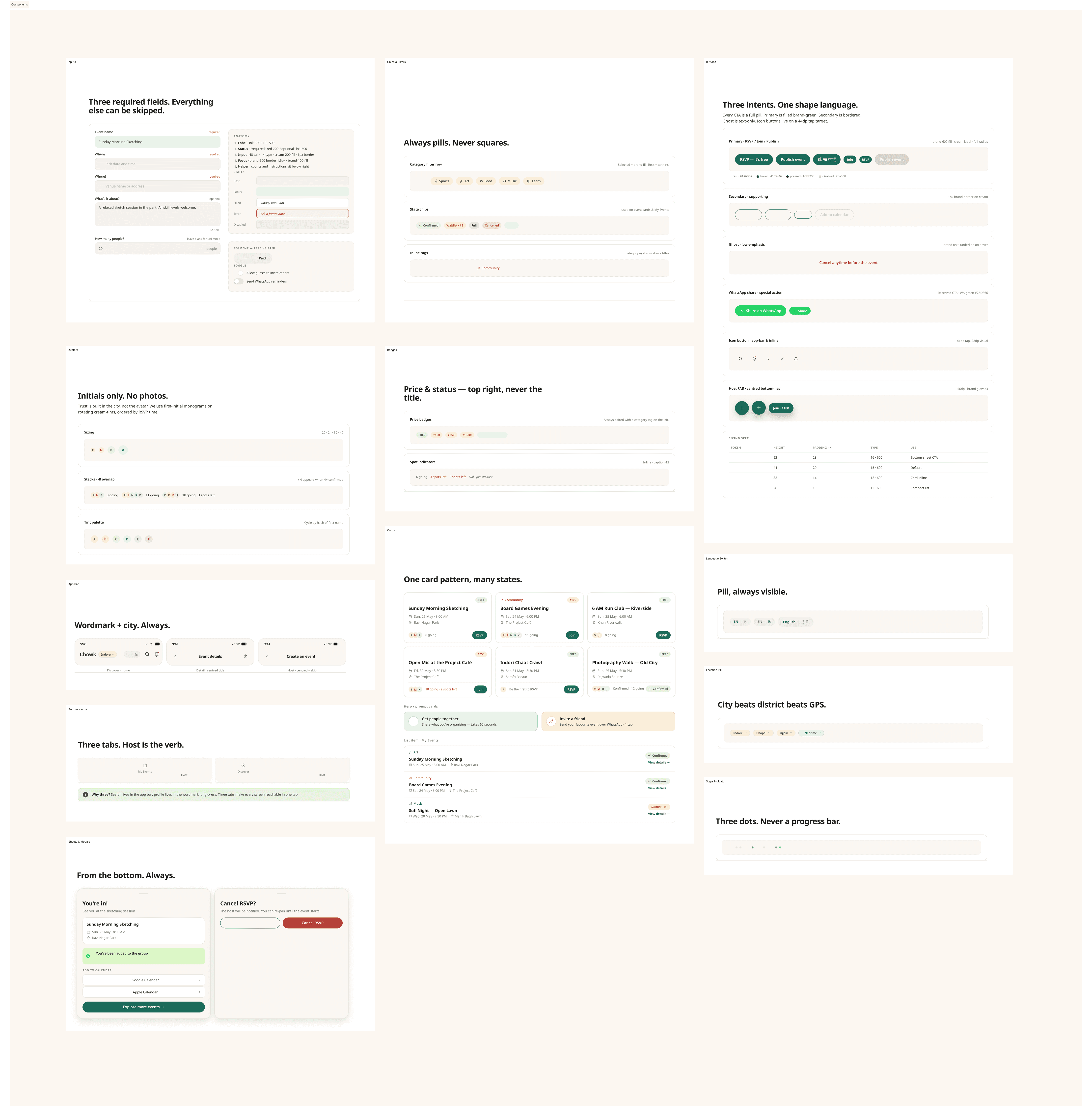
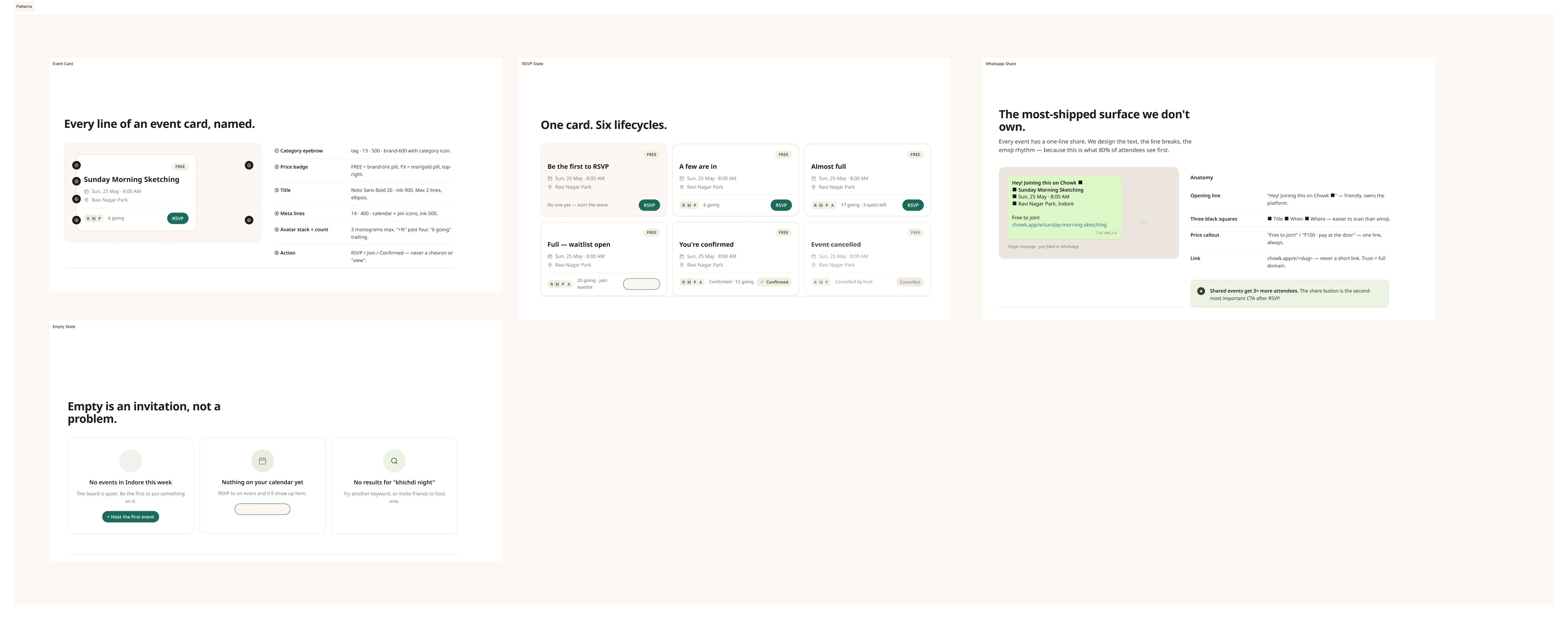
Full Design System

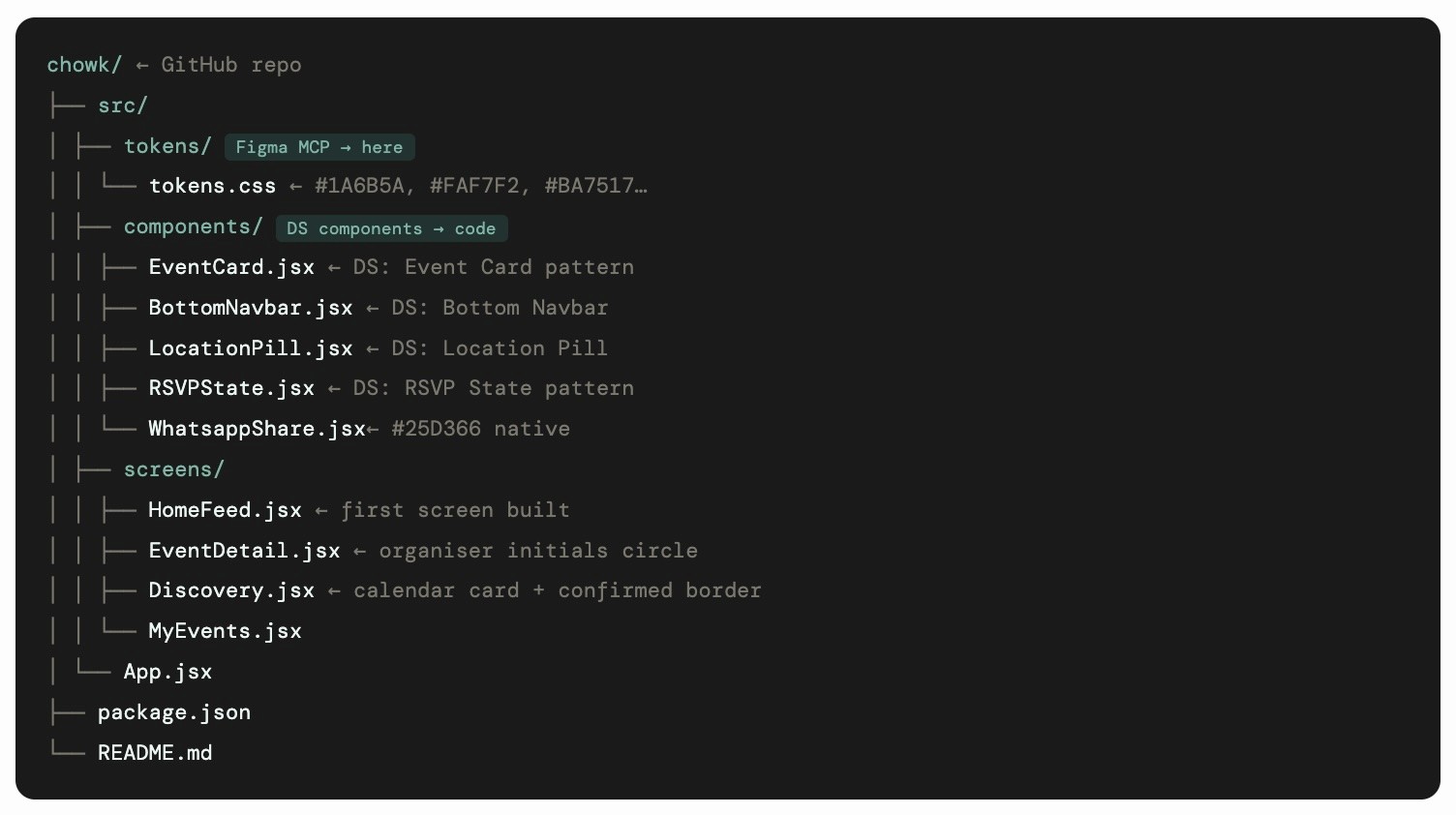
Code Structure

What this project taught me

My problem. My market. My brief.

I grew up in Ahmedabad where social life stayed inside WhatsApp groups. Chowk is the product I needed at 22. Your own friction is the sharpest brief you'll ever get.

India ≠ Indian user in the US.

Four years of US product experience didn't prepare me for tier-2 India's constraints. Bilingual trust, WhatsApp infrastructure, no hero photos — you have to feel the market, not reason your way to it.

Ship it imperfect. That's what v1 means.

This is my first India-native case study. The decisions are grounded, the gaps are honest. The confidence to publish something unfinished is itself a skill — and this project is where I built it.

AI amplifies. You still have to direct.

Claude didn't know Hinglish feels warmer at the confirmation screen. I did. The cultural instinct was mine — Claude made the execution possible. The partnership works because the human half brought something real.

I learnt networking's value too late.

Moving to the US showed me how much opportunity moves through rooms of people who simply showed up. Chowk exists so someone in Indore doesn't have to wait years to figure that out.

The Partnership Model

Creative Director & PM

Pinkle

Vision, concept, and product direction

Guided every design decision

Defined IA, flows, and user goals

Reviewed and approved all outputs

Pushed to GitHub, shipped the product

Structured Figma file organization

Design Partner & Engineer

Claude

Design system scaffolding & tokens

Component architecture and code

Claude Code: full app implementation

Figma structure and layer organization

GitHub-ready code, clean commits

Structured Figma file organization

Product Moat

01

Zero-friction supply

3 fields to create an event. No group setup, no professional account. The entire market ignored supply side, Chowk owns it.

02

Tier-2 native

No hero photos, avatar clusters, WhatsApp-native share, off-white surface. Not adapted downward, designed upward.

03

Activity-first language

"What's happening this week." No one admits loneliness. The cultural insight every Western-template competitor missed.

Create a free website with Framer, the website builder loved by startups, designers and agencies.